Bathrooms are the most requested renovation we discuss with homeowners in Monmouth, Ocean and Middlesex Counties — and the project where budgets most often surprise people. A bathroom is a small room with almost every trade in it: demolition, framing, plumbing, electrical, waterproofing, tile, carpentry, glass, paint and finish fixtures all fit inside a space that is frequently under 50 square feet.
Below are the planning ranges we use with homeowners in early conversations, followed by an honest look at what pushes a project toward the top or bottom of each range.
2026 Bathroom Planning Ranges in New Jersey
Cosmetic update — roughly $12,000 to $25,000
Nothing moves. The layout stays exactly where it is. You are replacing a vanity, toilet, light fixture, mirror, flooring and possibly a tub surround, then painting. Cosmetic updates work well when the underlying bathroom is sound and reasonably laid out and you simply want it to look current.
Standard full remodel — roughly $25,000 to $55,000
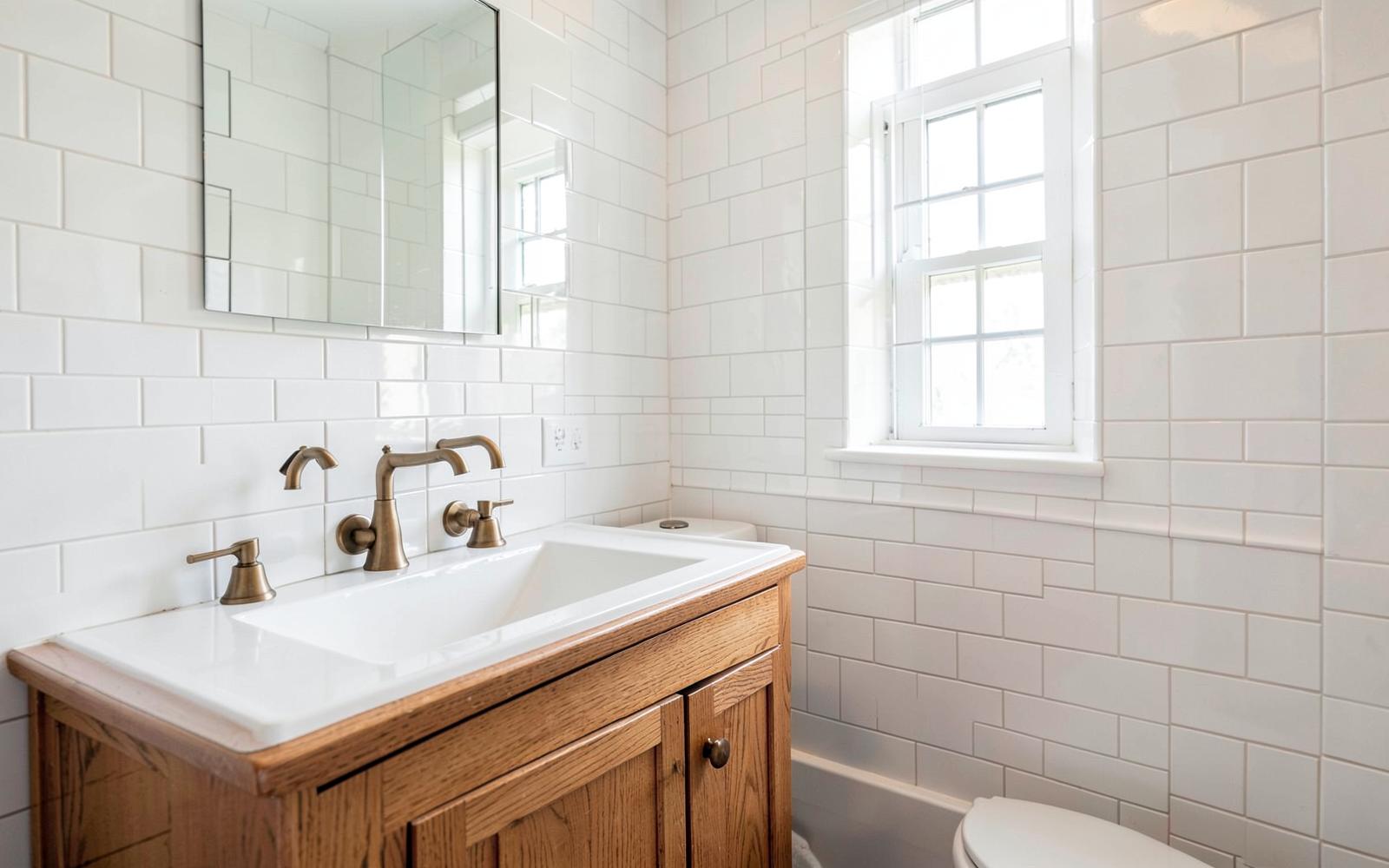
This is the most common hall or guest bathroom project. Everything comes out to the studs. You get new waterproofing, new tile floor and shower or tub surround, a new vanity and top, new fixtures, ventilation, updated electrical and often minor plumbing adjustments. Layout largely stays, though small shifts are possible.
Higher-end renovation — roughly $55,000 to $90,000
Larger footprint, custom tile work, a curbless or fully glassed shower, heated floors, custom vanity and millwork, upgraded plumbing valves, and sometimes wall or window changes. Design time increases and so does the number of specialty trades.
Primary bathrooms — roughly $70,000 to $120,000 and up
Primary suites often include double vanities, a freestanding tub, a large shower with multiple valves and body sprays, a private water closet, custom storage, and finishes chosen for longevity. When a primary bath is being reconfigured or expanded into adjacent space, structural and HVAC work enter the picture.
Where the Money Actually Goes
- Labor. Typically the largest single share of a bathroom budget. Small rooms take skilled hands, not fewer hours.
- Tile. The material cost is usually modest compared to the labor. Large-format tile, mosaics, herringbone, niches and curbless entries all add setting time.
- Vanities and tops. A stock vanity and a custom furniture-grade piece can differ by many thousands of dollars.
- Plumbing. Supply lines, drains, valves and any relocation. Rough plumbing is invisible when finished but it is real work.
- Electrical. Dedicated circuits, GFCI protection, recessed lighting, vanity lighting, exhaust fans and heated floor circuits.
- Fixtures. Faucets, shower systems, toilets and glass. Shower glass in particular is often underestimated.
- Permits and inspections. Required for most plumbing, electrical and structural work.
Why Two Identical Bathrooms Cost Very Different Amounts
Homeowners often compare notes with a neighbor and find the numbers do not line up. Usually one of these explains it:
- Moving plumbing. Sliding a toilet three feet or converting a tub alcove into a shower can mean opening floors, rerouting drains and, in some homes, working around joists. This is one of the largest cost swings in a bathroom.
- Structural changes. Widening a doorway, removing a wall, framing a new window or building a curbless shower pan can require structural adjustment.
- Older-home conditions. Much of the housing stock in the Bayshore, Red Bank, Old Bridge and Toms River areas predates modern plumbing and wiring standards. Cast-iron drains, knob-and-tube remnants, uneven subfloors, plaster walls and prior water damage are frequently discovered at demolition.
- Customer-selected finishes. Two bathrooms with the same scope can be $20,000 apart based purely on tile, glass, faucet and vanity selections.
- Access and protection. A second-floor bathroom in an occupied home requires more protection, containment and material handling than a first-floor gut.
Local Context for Monmouth, Ocean and Middlesex Homeowners
A few realities show up repeatedly in our area. Older Cape Cods and colonials in places like Middletown, Hazlet and Old Bridge often have small, tightly framed baths where any layout change becomes structural. Coastal homes in Sea Bright, Highlands and Point Pleasant may have elevation, moisture or flood-related considerations that affect materials and mechanical locations. Newer developments in South Brunswick and Brick tend to have more predictable framing, which usually makes scope easier to pin down early.
Permit requirements and inspection scheduling also vary between municipalities, which affects timeline more than price — but a delayed inspection can still hold up tile or trim work.
How to Build a Bathroom Budget That Holds Up
- Decide early whether the layout is staying. That one decision moves the number more than any finish choice.
- Set a realistic allowance for tile, vanity, fixtures and glass before you fall in love with a showroom selection.
- Keep a contingency of roughly 10–15% for older homes. Conditions behind the walls are unknown until demolition.
- Compare proposals on scope, not just the bottom line. A lower price often means fewer items are included.